Fostering curiosity in kids (and their parents) since 2011

Posts from the ‘Questions’ category

On an average day, my daughter’s question-to-declarative sentence ratio clocks in at a healthy 5:1. In this section of the blog, I explore what happens when instead of saying “I don’t know,” I say “Let’s find out!”

“Why didn’t miners during the California Gold Rush realize eating potatoes could prevent scurvy?”

As we learned last week, miners during the Klondike Gold Rush in 1896-1899 valued the scurvy-fighting power of the humble potato so highly they were willing to pay $25 per bushel for them. When I told my husband about it, he calmly pointed out that the cure for scurvy would have been known for almost a century by that time. “Wouldn’t the folks in the California Gold Rush of 1848-55 also have known to eat potatoes to prevent it?”

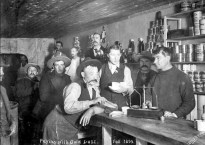
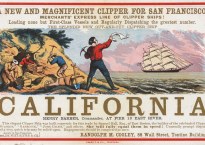
In this black and white photo, miners wait as the store manager weighs out their gold dust.

“Were potatoes ever so valuable that miners paid for them with gold?”

About two years ago, I slipped a note into The Nine-Year-Old’s lunch box. It was one of those preprinted affairs with a sweet little message on the front and a bit of trivia on the back that read: “Did you know? Potatoes were once so valued for their Vitamin C content that miners traded them for gold.” I know the exact wording because it seemed so plausible and unlikely that I took a picture of the card so I could look it up one day. Two years later, today’s the day. Were potatoes ever so valuable that miners paid for them in gold?

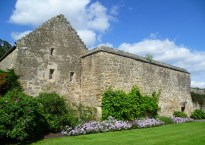
The medieval sundial looks like a hole in a stone wall surrounded by scratches in a circle at regular intervals.

“Did clocks even have minute hands in 12th C France?”

As you may remember from my original post on the oddities of tennis scoring, Billie Jean King believes that the reason tennis is scored Love-15-30-40 may have been because the clock hanging over the indoor tennis court was the handiest tool available for keeping score. When I shared this theory with my husband, he immediately shot it to bits. “Did medieval clocks even have minute hands?”

Ancient stone building with lovely gardens.

“What was the significance of the number 4 in medieval France?”

That tennis post I did last week keeps generating questions. One reader noted that it seemed weird that the 6 sets in medieval tennis contained only 4 60-degree games each, especially if tennis scores were meant to represent the 360 degrees in a circle. Mathematically speaking, it would make more sense to have each set contain 6 games. Which raised the question, why 4? Was the number 4 significant in some way for medieval tennis players?

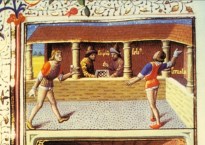
Illustration shows two men playing a version of tennis that doesn't use a net.

“Why is tennis scoring so weird?”

The other day while driving past a neighborhood tennis court, the subject of scoring naturally came up. Everyone in the car agreed that the standard Love-15-30-40 scoring system used in tennis was pretty bizarre. Oddly specific, too, in that way that hints at an interesting story. So I looked it up. Why is tennis scoring so weird anyway?

“Do cats eat newts?”

Do cats eat newts? The answer to this question, like so many cat-related issues, is yes, they probably will, but no they really shouldn’t. You shouldn’t either, by the way. Why are newts so bad for cats?

“Do we really have to refrigerate ketchup?” 

Over dinner one Sunday night, the subject of ketchup came up. Specifically, the various ways of storing it. Mommyo had always refrigerated ketchup bottles after opening them, so The Nine-Year-Old was somewhat shocked to learn that once upon a time (and even now in certain households) ketchup was not refrigerated.The Nine-Year-Old, aghast, “Not even after you open it?”Uncle Phil, Ketchup Maven, “Not even then.” Naturally, The Nine-Year-Old wanted to know: Do you really have to refrigerate ketchup?