“Mommyo, when can I draw my own adjectives?”
“Mommyo, when can I draw my own adjectives?” “Um, now?”
“Mommyo, when can I draw my own adjectives?” “Um, now?”
“Which part of a butterfly is the thorax?”
Stranded penguins, cloud formation, vague threats from children, and other news of the week
Reading Prehistoric Actual Size to my daughter, I found myself placing my hands on the page very carefully, lest I snag my finger on a Baryonyx claw or accidentally touch the Very Large Cockroach. It’s not that the illustrations are so terribly life-like. They are clearly pictures. It’s just that the effect of seeing these creatures, or in most cases, bits of these creatures, at actual size is so startling.
My daughter’s latest balloon trauma happened just this weekend, when her brand new purple balloon popped on impact with a silver car parked in the hot…
The last time I tried to throw away my four-year-old’s stash of empty toilet paper rolls, she talked me into making a Father’s Day gift with them instead. Turns out there are a ton of kids’ crafts that use items we adults would otherwise simply recycle.
The first time my 4-year-old saw her brand new balloon float away into the sky, she thought it was pretty awesome right up until the moment she realized it wasn’t coming back. When she had recovered enough to ask questions, she naturally wanted to know how high it would go before it popped.
In 1853, almost no one knew what a dinosaur looked like. No one had ever mounted a complete dinosaur skeleton, and who could imagine what these strange creatures would have looked like with muscles, skin, teeth, eyes, tails, and feet all in their proper places from just a heap of bones? In the Dinosaurs of Waterhouse Hawkins, Barbara Kerley tells the story of the Victorian artist who, with the help of renowned scientist Richard Owen, brought dinosaurs to life for the people around him.
Lately my daughter has been asking me a lot of questions that seem designed to get me to floss more. A few days ago, she asked if the enamel on our bathtub was the same stuff we had on our teeth. Today she asked what a toothache looks like.
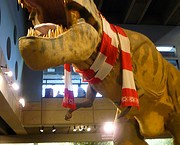
The Museum of Science in Boston boasts two life-size statues of the T. Rex. The one in the permanent dinosaur exhibit stands in the now-classic T. Rex pose: the predator in mid-stride, while the other stands primly with his tail on the ground. How do scientists know which stance is right? And why do they change their minds about dinosaurs all the time?
 CATERPICKLES