(School) Year-end nonfiction project update
Hello! *taps screen* Is this thing on?
After a quieter than expected blogging season, I’m back. A few things have happened since my last post, and I’m here at last to tell you about some of them.
What happened with our 2022-23 nonfiction project?
Library assistants in my school district typically work five or six days after school gets out prepping the library for the summer, and if time permits, for the reopening of school in the fall.
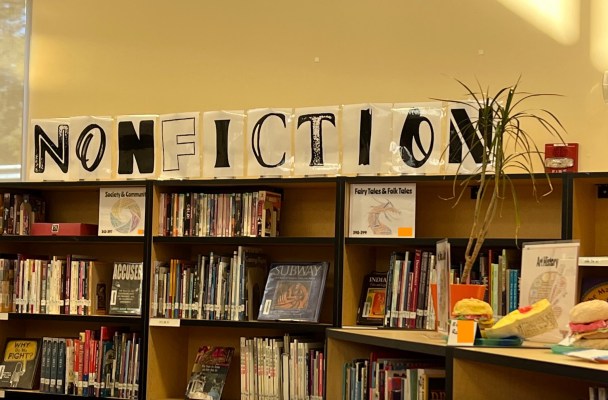
As you may remember, I spent that week last year reorganizing the nonfiction section to make it more independently browse-able during the 2022-23 school year. In the process, I rebalanced the shelves, selected 1-3 books with interesting covers to display face-forward on every shelf, updated and increased signage to make it easier for students to find topics they were interested in, and once school started, was relentless about incorporating nonfiction books into as many book displays as possible.
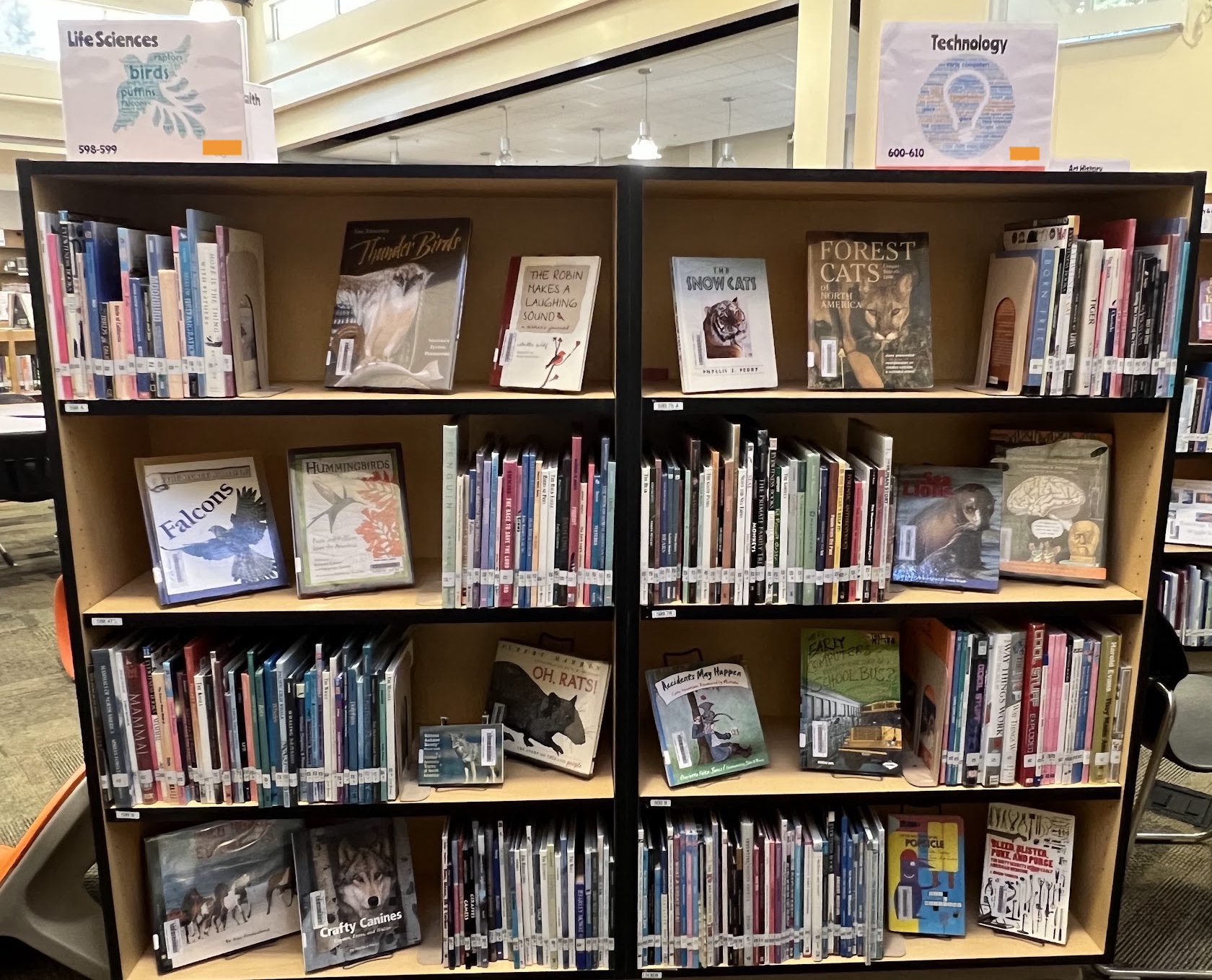
Meanwhile, my Teacher Librarian gave tours of the nonfiction section to incoming students at the start of the new school year, invited our science and social studies teachers to bring their classes in to find interesting nonfiction choice reads throughout the year, and dedicated the last week of the first semester to hosting a Nonfiction Book Cafe for the science classes to showcase the variety of books we have in our nonfiction collection.
The Nonfiction Book Cafe was how we discovered the previously untapped but deep and abiding interest in cookbooks among our student population. Sadly, I did not get a photo of the table with all of the cookbooks because frankly I was not expecting the intense interest it would generate. I did, however, get photos of two of our other tables, the “Fun with Science” table and a slightly picked over version of the “Wait…Did that REALLY Happen?” table next to it.
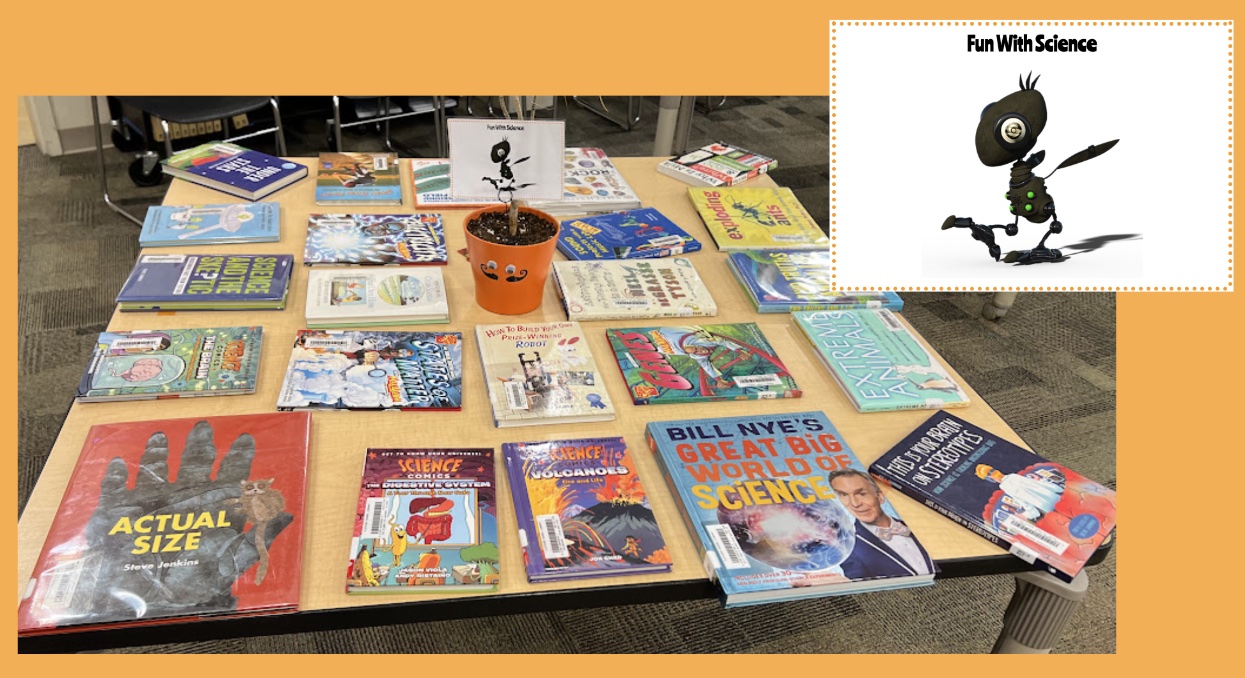
We kept the Book Cafe layout very simple, as you can see. I had some fun making the signs using royalty-free images sourced from Pixabay, but otherwise we focused our energy on curating a collection of interesting books in each category to entice readers:
- Fun with Science
- Wait… Did that REALLY Happen?
- Cook and Bake Over Break
- Arts & Entertainment
- Plagues & Pestilence: Medicine Then & Now
- Sports & Games
- Duct Tape & Doodling.
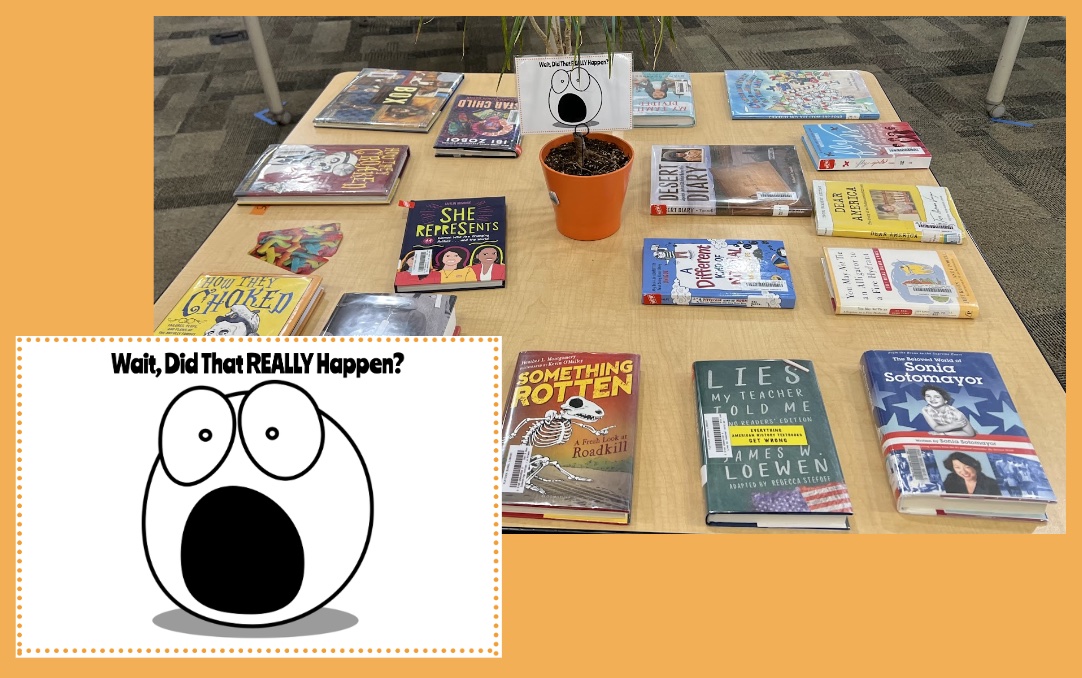
We checked out a lot of books that day, but more importantly, the event sparked an interest in our nonfiction collection, particularly in our cooking, crafting, and drawing books, that continued throughout the rest of the year.
So did it work?
During the 2021-22 school year, 1505 print* nonfiction books were either checked out by students or used in-house to support various class projects. Roughly 533 students attended our school that year, giving us a per-student nonfiction circulation of 2.8 books per student.
During the 2022-23 school year, print nonfiction circulation jumped to 3754, while our student population increased to 545 students, giving us a per-student nonfiction circulation of roughly 6.9 books per student.
That’s … pretty great.
(*Midway through the year, our ebook service provider stopped reporting ebook usage by individual school site and lumped all of the ebook usage at the middle school level into a single district-wide number. It was impossible for me to figure out how much of that middle grade reading had been done by students at my school, so I was forced to switch to simply tracking print circulation.)
Related Links:
- Nonfiction project update (Caterpickles)
- Making our nonfiction section more browse-able (Caterpickles)
- 10 Ways to Nurture and Nourish Nonfiction Readers (School Library Journal)
 CATERPICKLES
3 Responses to “(School) Year-end nonfiction project update”
Been a while!
LikeLike
[…] you may remember, at the end of the 2021-2022 school year, I spent a week rebalancing all of the books in our fiction, graphic novel, series, story collection,… (Completing this in a week was made possible by the fact that my daughter volunteered to come in […]
LikeLike
[…] (School) Year-end nonfiction project update (Caterpickles) […]
LikeLike